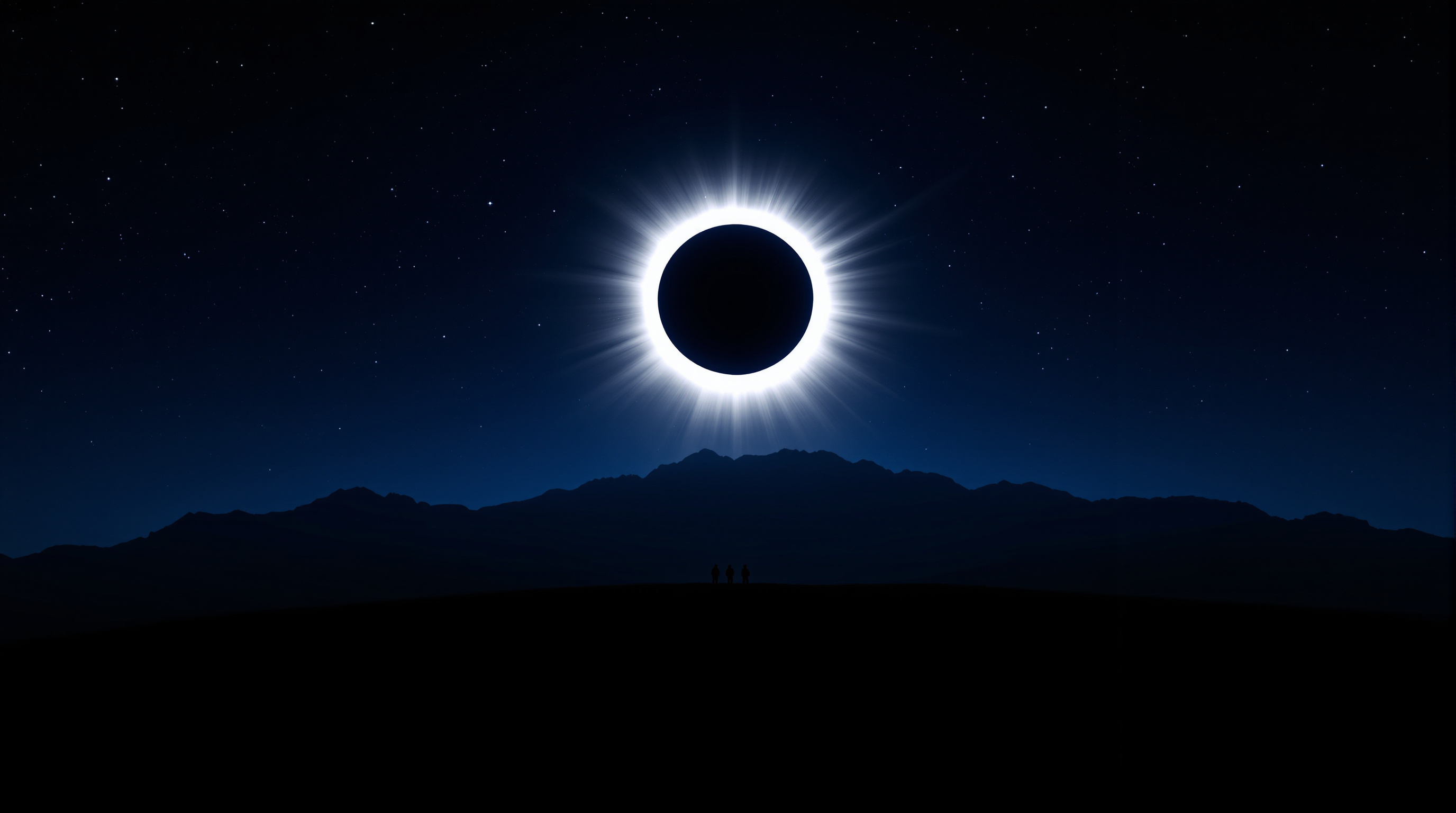
On the morning of August 21, 2017, a shadow raced across the United States from Oregon to South Carolina, and for a couple of glorious minutes the middle of the day turned to twilight. The Great American Eclipse was the first total solar eclipse to cross the country coast to coast in 99 years, and west-central Idaho found itself right on the doorstep of the spectacle. In Cambridge, the little town filled up with travelers who had come from all over the world to stand in the path of the Moon's shadow.
So close to totality
Here is a detail worth getting right: Cambridge itself sat just outside the narrow band of total darkness. The centerline of totality swept through eastern Oregon and dipped through central Idaho to the south, so the town experienced a deep, dramatic partial eclipse — well over ninety percent — while true totality lay a short drive away. That made Cambridge an ideal basecamp: close enough to reach the centerline on eclipse morning, but calmer and more comfortable than the crowded fields directly beneath the path.
Eclipse chasers are a resourceful bunch. Many based themselves in and around Cambridge and drove out at dawn to forest clearings and ranch meadows within the path, where they set up telescopes, cameras, and folding chairs and waited for the light to change.
What a total eclipse is really like
People who have seen totality struggle to describe it, and people who have only seen a partial eclipse often do not understand the difference. As the Moon covers the last sliver of Sun, the temperature drops, colors go strange and metallic, birds fall silent, and a 360-degree sunset glows around the horizon. Then the Sun's corona — its wispy outer atmosphere — blazes into view around a black disk, and for a few minutes you are looking at something most humans never witness. NASA's eclipse science pages explain the mechanics and, importantly, the eye-safety rules for viewing.
Why it mattered to a small town
For a place the size of Cambridge, an event like this is unforgettable. Cafes and shops did a year's business in a weekend; strangers compared notes on cloud forecasts and camera settings; and for one bright morning a quiet Idaho town was part of a continental spectacle. It is exactly the sort of thing that makes a rural community's calendar — alongside the county fair and rodeo — and it left a lasting memory.
Looking ahead
Total solar eclipses return to North America on their own long schedule — the continent saw another in April 2024, and future paths will eventually cross the West again. When they do, towns like Cambridge, perched near the edge of wild country and easy to reach by highway, will once more make ideal basecamps for the travelers who chase the shadow. Until then, the ordinary Idaho sky — famously dark and star-filled away from city lights — is reason enough to look up.