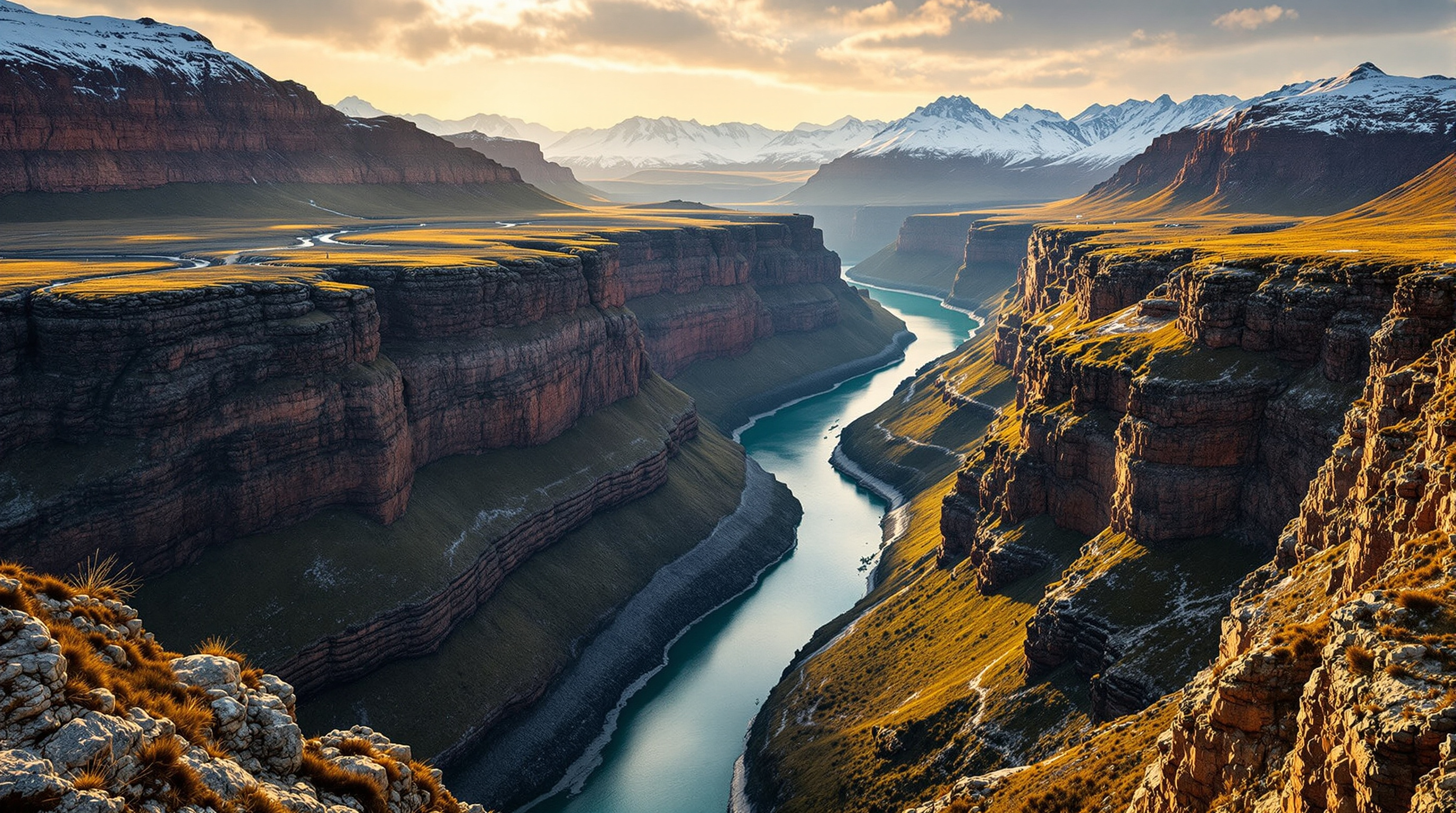
Ask anyone in Cambridge where to point a first-time visitor, and the answer is usually the same: go see the canyon. West of town, the Snake River has spent millions of years cutting Hells Canyon, a gorge so deep it outmeasures the Grand Canyon — nearly 8,000 feet from the Snake to the summit of He Devil in the Seven Devils range on the Idaho side. It is one of the great wild landscapes of the American West, and Cambridge is one of its natural gateways.
How the canyon was made
The story is written in the rock. The dark, layered walls are largely ancient volcanic and marine rock, uplifted over eons while the river held its course and sawed downward. The result is a chasm of staggering relief, where a summer afternoon on the river can be blazing hot while snow still lingers on the peaks a vertical mile above. The Hells Canyon National Recreation Area, administered by the U.S. Forest Service, protects some 650,000 acres of this country.
The three dams
The stretch of river closest to Cambridge is defined by three hydroelectric dams built in the mid-twentieth century — Brownlee, Oxbow, and Hells Canyon. Their reservoirs have become recreation destinations in their own right, with boat ramps, campgrounds, and fishing for bass, crappie, catfish, and sturgeon. The reservoirs are the most accessible way to get onto the water: you can launch a boat, wet a line, or simply picnic at the water's edge within an hour or so of town.
Into the wild river
Below Hells Canyon Dam the river runs free, and this is where the canyon earns its reputation. The whitewater here — Wild Sheep, Granite Creek, and other named rapids — draws rafters and jet-boaters from around the world. Most visitors experience it with a licensed outfitter, either on a thrilling single-day jet-boat run or a multi-day raft expedition that camps on sandy beaches beneath the walls. Along the way you may spot bighorn sheep, mountain goats, elk, and eagles, along with the pit houses and rock art of the peoples who lived here for thousands of years.
Seeing it from the rim
You do not have to get on the water to feel the scale of Hells Canyon. Forest Service roads climb to overlooks on the canyon rim where the whole gorge falls away at your feet. The high country is snowbound well into early summer, so rim access is generally a warm-season pleasure; check current road status with the Forest Service before setting out, and carry more water and fuel than you think you need — services are scarce once you leave the highway.
Heat, water, and the shape of the day
The canyon's depth is also its weather. Air warms as it sinks, so the river corridor can run twenty degrees hotter than the rim on the same afternoon, and the rock radiates that heat well into the evening. Experienced visitors plan around it rather than through it: get on the water or the trail early, take the middle of the day slowly and in shade, and save the overlooks for the long light at either end. Carry far more water than seems reasonable, and remember that there is no shop, no tap, and often no signal once the pavement ends.
Planning around the canyon
From Cambridge, the reservoirs and the most popular launch points are an easy day trip, which is part of what makes the town such a practical basecamp. Spring and fall bring mild temperatures and thinner crowds; midsummer is hot on the water but glorious on the high rim. For guided trips, book well ahead in peak season. When you are ready to build the rest of your itinerary, our things-to-do guide and trip planner will round out the picture.